Every year, thousands of travelers dream of witnessing one of Africa's most extraordinary wildlife spectacles: the Great Migration in Tanzania. While much of the conversation focuses on the wildebeest crossings, predator encounters, and safari experiences, there is another factor that can dramatically influence your trip-the route you choose to reach the Serengeti.
The Serengeti is vast. Covering nearly 15,000 square kilometers, wildlife movements change throughout the year. Spending long hours driving from distant gateways can reduce valuable safari time and increase travel fatigue. This is why more travelers are choosing strategically planned fly-in safaris that place them closer to the action from the moment they arrive.
With an extensive network connecting major Tanzanian cities and key safari destinations, Flightlink offers travelers convenient access to multiple Serengeti airstrips, helping them maximize wildlife viewing while minimizing travel time.
The Great Migration is constantly moving. Herds travel across different regions of the Serengeti ecosystem throughout the year, meaning that the best viewing locations vary depending on the season.
Choosing the right arrival point can mean the difference between spending several hours on a road transfer or arriving close to your safari lodge and starting your game drive almost immediately.
Fly-in safaris allow travelers to:
Flightlink's network is designed to connect travelers seamlessly between Dar es Salaam, Zanzibar, Arusha, Kilimanjaro and various safari destinations, including multiple Serengeti gateways.
For many travelers, Arusha serves as the starting point for Tanzania's famous northern safari circuit. Flightlink connects Arusha with Seronera, one of the most important airstrips within Serengeti National Park.
Seronera lies in the central Serengeti and is known for year-round wildlife viewing. Even when the migration moves elsewhere, this region remains rich in resident wildlife.
Highlights include:
This route is ideal for first-time safari visitors who want a balanced Serengeti experience regardless of season.
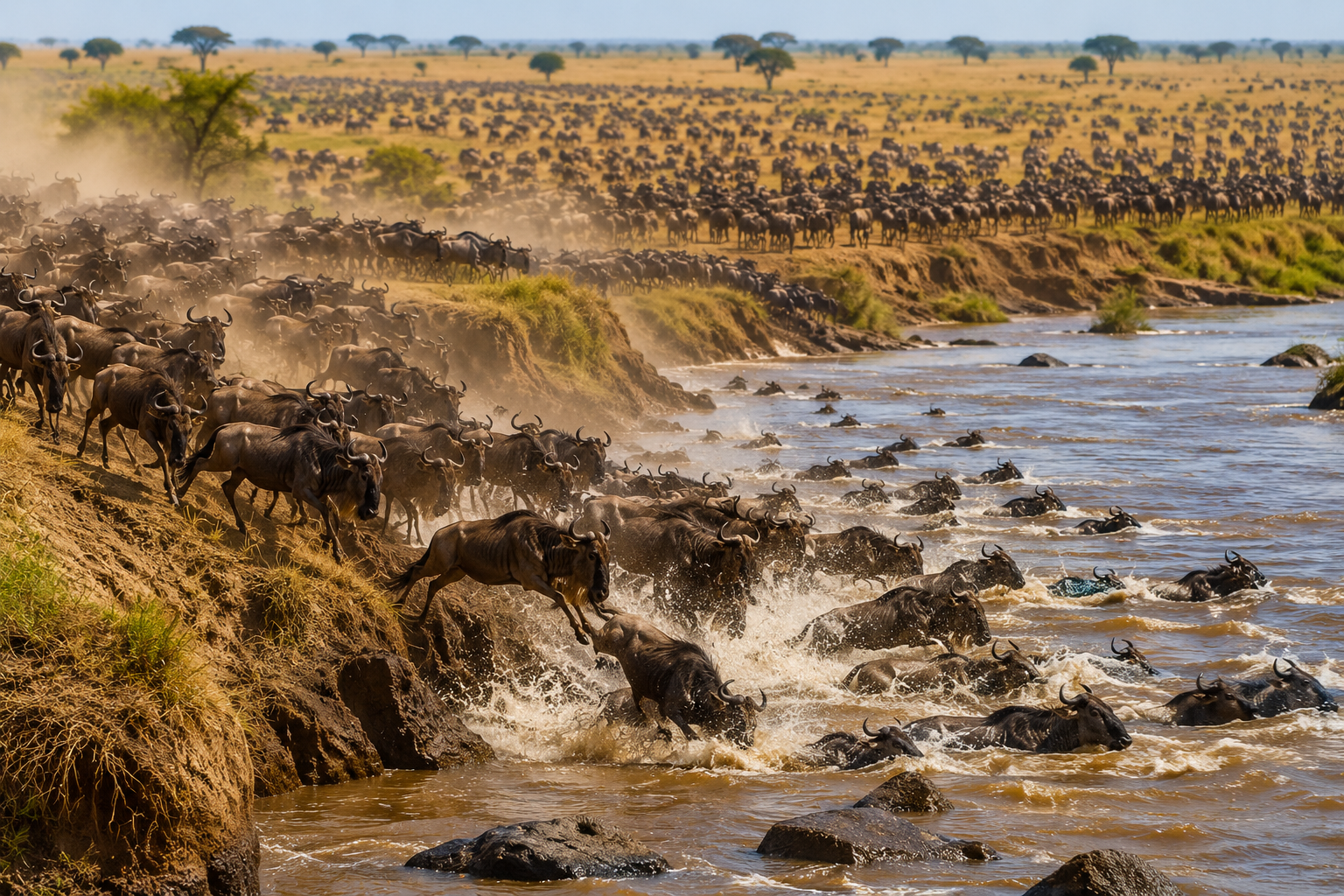
For travelers hoping to witness the famous river crossing season, Kogatende is often the preferred gateway.
Flightlink serves Kogatende Airstrip in the northern Serengeti, bringing visitors closer to areas where dramatic migration activity can occur during certain months of the year.
The northern Serengeti is known for:
Flying directly into Kogatende helps travelers avoid lengthy overland journeys from central Serengeti areas and places them closer to the wildlife action.
For travelers with limited time, this route can significantly increase the chances of maximizing safari experiences during migration season.
Another strategic Serengeti gateway served by Flightlink is Fort Ikoma Airstrip. Located near the western Serengeti ecosystem, it provides access to a region known for diverse wildlife and unique safari experiences.
Benefits include:
Travelers exploring multiple regions of the Serengeti often find Fort Ikoma a practical arrival or departure point.
One of Tanzania's greatest advantages is the ability to combine world-class beaches with unforgettable safari experiences.
Flightlink connects Zanzibar with Tanzania's safari network, making it possible to move efficiently between the Indian Ocean and the Serengeti.
A popular itinerary includes:
This combination allows travelers to experience two of Tanzania's most iconic attractions within a single holiday.
For international travelers visiting both Kenya and Tanzania, Flightlink also operates routes connecting Nairobi (Wilson Airport) with Tanzania's safari circuit. This creates convenient opportunities for multi-country safari itineraries.
Travelers can combine:
This connectivity makes cross-border safari planning considerably easier.
Selecting the correct airstrip depends largely on your travel dates and safari goals.
Choose Seronera If:
Choose Kogatende If:
Choose Fort Ikoma If:
Working with your safari operator can help determine which Flightlink route aligns best with current wildlife movements and lodge locations.
Many travelers underestimate how much time can be lost during transfers. A fly-in safari can often save several hours compared to extensive road journeys, allowing more time for:
For travelers visiting Tanzania for only a week, those saved hours can make a significant difference.
The Great Migration may be the headline attraction, but the way you reach the Serengeti can shape your entire safari experience.
By using Flightlink's network of safari destinations and Serengeti airstrips, travelers can position themselves closer to wildlife activity, reduce travel times, and make the most of every day in Tanzania. Whether you're heading to Seronera for year-round wildlife viewing, Kogatende for migration season excitement, or Fort Ikoma for western Serengeti adventures, choosing the right air route can transform your safari from good to unforgettable.
1. When is the best time to see the Great Migration?
The Great Migration moves throughout the Serengeti ecosystem during the year. Different regions offer different viewing opportunities depending on the season, which is why choosing the correct airstrip is important.
2. Can you fly directly into the Serengeti?
Yes. Flightlink operates flights to key Serengeti airstrips including Seronera, Kogatende, and Fort Ikoma, allowing travelers to access safari regions without lengthy road transfers.
3. Which Serengeti airstrip should I choose?
It depends on your safari plans. Seronera is ideal for year-round wildlife viewing, Kogatende is popular for northern Serengeti migration experiences, and Fort Ikoma provides access to western Serengeti regions.
4. How many days are needed for a Great Migration safari?
Most travelers spend between 4 and 7 days exploring the Serengeti. A fly-in safari can help maximize wildlife viewing time during shorter trips.
5. Is flying the best way to experience the Serengeti?
For many travelers, yes. Flying reduces travel time, increases safari time, and provides access to remote regions that would otherwise require long road journeys. It is particularly valuable for travelers combining multiple destinations within Tanzania.
Sit Tight!
Preparing for an amazing journey

Destinations
Tanzania:
Kenya:
Information
More Info
Destinations
Tanzania:
Kenya:
Quick Search
Address
Tanzania HQ
3rd Floor, Oyster Pearl Galleria, Chole Road, Masaki. P.O.Box 2858, Dar es Salaam, TanzaniaKenya - HQ
Wilson Business Park, Wilson Airport. Karen, Langata Road, Nairobi, KenyaPhone Numbers
Flightlink Tanzania Call Centre TOLL FREE Number
0800 750 427Flightlink Global Call Centre Number
+255 750 017 230Whatsapp Reservations & Customer Support
+255 794 938 635Kenya
+254 207 903 652 / 53/ 54/ 55/ 56Emails
Tanzania - Reservations
centralreservations@flightlink.co.tzKenya - Reservations
reservations.kenya@flightlink.co.tzCustomer Service
customerservice@flightlink.co.tzWorking Hours
Reservations
Monday-Friday - 08:00Hrs - 17:00Hrs
Saturday - 09:00Hrs - 13:00Hrs
Sunday and Public Holidays - Closed






© 2026 Flightlink. All rights reserved. Designed & Developed By DotSyndicate